Water Extraction & Removal in Mission Viejo, CA
Every dry-out starts with getting the water out of the building. The extraction crew pulls standing water and wrings carpet and pad with truck-mounted equipment, so the drying equipment works on damp materials instead of puddles.
(888) 450-9281Pull the water out of the Mission Viejo home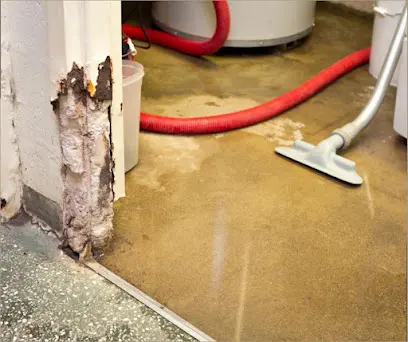
What to do first about water extraction in Mission Viejo
Stop the source
Shut the fixture valve or the main water supply.
Cut power to wet rooms
Only at the breaker, and only if the panel is dry.
Stay out of deep water
Standing water near outlets or cords can be energized.
Move what you can
Lift rugs, electronics and furniture off the wet floor.
Call for extraction
The sooner the water is out, the less has to be removed.
How water extraction is handled in Mission Viejo, CA
Source and safety
The crew confirms the water is stopped and the power is safe.
Extraction
Truck-mounted or portable units pull standing water and wring carpet.
Moisture mapping
Meters and thermal imaging show what is still wet.
Drying set
Air movers and LGR dehumidifiers go in, sized to each room.
What does water extraction cost in Mission Viejo, CA?
In Mission Viejo, CA, water extraction typically runs $400 to $2,500 as a stand-alone step, with most full water losses (extraction plus drying) landing between $1,500 and $6,000 depending on the water category and how far it spread.
Small area
- One room
- Hard floors or carpet
- Quick extraction
Several rooms
- Carpet and pad
- Weighted extraction
- Furniture moved
Large or multi-level
- Upstairs and downstairs
- Truck-mounted unit
- High water volume
These are typical ranges, not a quote. The drivers are the water category, the square footage, the material class and how fast drying started. For a closer planning number, try the water damage cost calculator.
Water on the floor keeps moving. It wicks up drywall, soaks into carpet pad and finds the gaps under baseboards and cabinets. In a Mission Viejo townhome or a two-story tract home, it can also move down through the subfloor into the rooms below. Extraction is how the restoration team stops that spread.
What extraction removes
- Standing water on tile, vinyl, laminate and concrete
- Water held in carpet and pad, pulled out with weighted extraction tools
- Water in garages, laundry rooms and entries where it pools
- Water that reached a lower level through the floor
Truck-mounted or portable
Truck-mounted extraction units sit outside and run a hose into the home, so the water leaves the building instead of filling a tank in the hallway. Condos and upstairs units that sit far from the parking area sometimes get portable extractors instead. The extraction crew chooses by distance, volume and access.
Once the floors are down to damp, the tech who does the walkthrough maps the moisture in walls, cabinets and subfloor. That map decides where the air movers and LGR dehumidifiers go and what, if anything, has to be removed.
Trade fact: carpet pad holds far more water than the carpet above it. When clean water is caught early, the carpet can often be dried in place; a saturated pad is usually replaced.
Clean water, gray water and black water
Extraction is the same first step on every loss, but what happens next depends on the water. A supply line or water heater is usually Category 1. A washing machine drain is Category 2. Sewage and outside flood water are Category 3, and porous materials they touch are removed. Ready.gov covers safety around flood water, and the EPA explains why drying within 24 to 48 hours matters. For contaminated water, see sewage backup cleanup.
Water Extraction and Removal questions in Mission Viejo, CA
Can I just use a shop vacuum?
A shop vacuum helps with a small spill, but it cannot pull water out of carpet pad, under cabinets or out of the subfloor. Truck-mounted extraction removes far more water, which shortens drying.
Will the carpet be saved?
Often, when the water is clean and extraction starts early. Carpet pad soaked for a long time, or touched by gray or black water, is usually replaced.
What happens after extraction?
The drying team maps the remaining moisture and sets air movers and LGR dehumidifiers. Readings are taken daily until the materials reach the drying goal.
Can water from upstairs reach downstairs?
Yes. In two-story homes and stacked condos, water moves through the subfloor and ceiling. Both levels get checked with meters.
Is extraction covered by insurance?
Extraction is part of mitigation, which policies often treat as part of a covered sudden loss. Coverage depends on your policy, so it is worth checking with your own insurer.
Do I need to be home?
Someone needs to let the crew in and approve the work. After that, the equipment runs day and night and the drying team returns to take readings.
Water extraction across Mission Viejo, CA
The Mission Viejo restoration crew handles water extraction around Lake Mission Viejo, Casta del Sol, Palmia, Aegean Hills, Pacific Hills and the Marguerite, Oso and Crown Valley Parkway corridors, ZIP codes 92690, 92691 and 92692, with Lake Forest, Laguna Hills, Rancho Santa Margarita, Ladera Ranch, Laguna Niguel, Aliso Viejo, Coto de Caza and San Juan Capistrano close by.
Water damage in Mission Viejo right now?
The restoration team extracts standing water, dries the structure to the IICRC S500 standard and documents every step for your insurance claim.