Structural Drying & Dehumidification in Mission Viejo, CA
Surface drying makes a room look finished. Structural drying makes it actually dry: the framing, subfloor, slab and wall cavities. The drying team sizes equipment to each room, takes readings every day and pulls equipment only when the materials reach the drying goal.
(888) 450-9281Start the Mission Viejo structural dry-out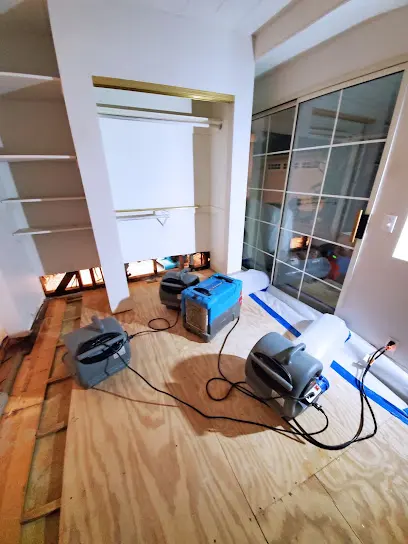
What to do first about structural drying in Mission Viejo
Stop the water source
Drying cannot start until the water stops.
Keep windows closed
Dehumidifiers work best in a closed space.
Leave equipment running
Turning it off at night slows drying.
Keep the air mover paths clear
Do not block airflow with furniture.
Let the readings decide
Equipment comes out when materials reach the goal.
How structural drying is handled in Mission Viejo, CA
Moisture map
Every wet material is recorded before equipment goes down.
Size the equipment
The class of loss sets the air movers and dehumidifiers.
Dry with daily logs
Readings and psychrometric logs are recorded every day.
Verify against reference
Materials match a dry reference before equipment leaves.
What does structural drying cost in Mission Viejo, CA?
In Mission Viejo, CA, structural drying typically runs $1,000 to $6,000 or more, depending on the class of loss, how many rooms need equipment and how long dense materials like slabs and hardwood take to dry.
Class 1 or 2
- One or two rooms
- Air movers and LGR
- Daily readings
Class 3
- Walls, ceilings, subfloor
- Several drying sets
- Psychrometric logs
Class 4
- Slabs and hardwood
- Desiccants and mats
- Longer drying
These are typical ranges, not a quote. The drivers are the water category, the square footage, the material class and how fast drying started. For a closer planning number, try the water damage cost calculator.
Water moves into materials that look dry on the surface: the bottom plate of a wall, the subfloor under carpet, the concrete slab under laminate. Structural drying is the process of pulling that water back out, measured with meters rather than judged by eye.
How a drying plan is built
- Moisture mapping records every wet material before equipment goes down
- The class of loss (1 to 4) sets how much equipment each room needs
- Air movers are placed to the room's evaporation load
- LGR dehumidifiers pull the evaporated water out of the air
- Desiccant dehumidifiers and drying mats handle dense materials like hardwood and slabs
Why the local climate matters
Mission Viejo air is usually dry, which helps, but coastal marine layer mornings and warm, humid late-summer days change how fast materials give up water. The drying team keeps windows closed and lets the dehumidifiers control the air, and adjusts the setup when the daily psychrometric readings show the air is not dry enough.
Trade fact: equipment stays until the readings say dry, not until the room looks dry. Pulling it early is how hidden moisture turns into mold and warped flooring weeks later.
The drying log
Every day, the drying team records the temperature, relative humidity and grains per pound of the air and the moisture content of the wet materials. That log is the proof that the structure dried, and it goes into the claim file. The EPA explains why drying within 24 to 48 hours matters, and its indoor air quality pages cover moisture and health. For the first step of any loss, see water extraction.
Structural Drying and Dehumidification questions in Mission Viejo, CA
What is the IICRC S500?
IICRC S500 is the industry standard for professional water damage restoration. It sets out how water is categorized, how drying equipment is sized and how a structure is confirmed dry.
How long does structural drying take?
A contained Class 1 or 2 loss usually dries in three to five days. Hardwood, plaster and slabs take longer.
Why can't I just open the windows?
Outside air can add moisture and makes the dehumidifiers work harder. A closed space lets the equipment control the air.
What is a dry reference?
A dry reference is the same type of material in an unaffected part of the home. Wet materials are dry when they read within 2 to 4 points of it.
Is the equipment loud?
Air movers and dehumidifiers make steady fan noise. It is normal and it runs day and night until drying is done.
Why are readings taken every day?
Daily readings show whether the drying is on track and when each area reaches the goal, and they document the job for the claim.
Structural drying across Mission Viejo, CA
The Mission Viejo restoration crew handles structural drying around Lake Mission Viejo, Casta del Sol, Palmia, Aegean Hills, Pacific Hills and the Marguerite, Oso and Crown Valley Parkway corridors, ZIP codes 92690, 92691 and 92692, with Lake Forest, Laguna Hills, Rancho Santa Margarita, Ladera Ranch, Laguna Niguel, Aliso Viejo, Coto de Caza and San Juan Capistrano close by.
Water damage in Mission Viejo right now?
The restoration team extracts standing water, dries the structure to the IICRC S500 standard and documents every step for your insurance claim.