About Mission Viejo Flood Damage
Water damage restoration for Mission Viejo, California and the Saddleback Valley, from the first extraction to the final moisture reading.
Find us on GoogleWater damage restoration built around how Mission Viejo homes are made
Mission Viejo grew as one of the largest master-planned communities in the country, with neighborhoods laid out around Lake Mission Viejo, the parkways and the hills below the Saddleback peaks. Most of its homes went up from the late 1960s through the 1990s: single-story and two-story tract homes on concrete slabs, and large communities of townhomes and condos with shared walls.
Those details decide how water damage happens here. The restoration team extracts the standing water, maps what is still wet under the flooring, inside the walls and in the ceiling cavities, and dries the structure to the IICRC S500 standard. Equipment stays until the readings say dry.
Every loss is documented with a moisture map, daily readings and timestamped photos, so the claim file is ready when the adjuster or the HOA asks for it.
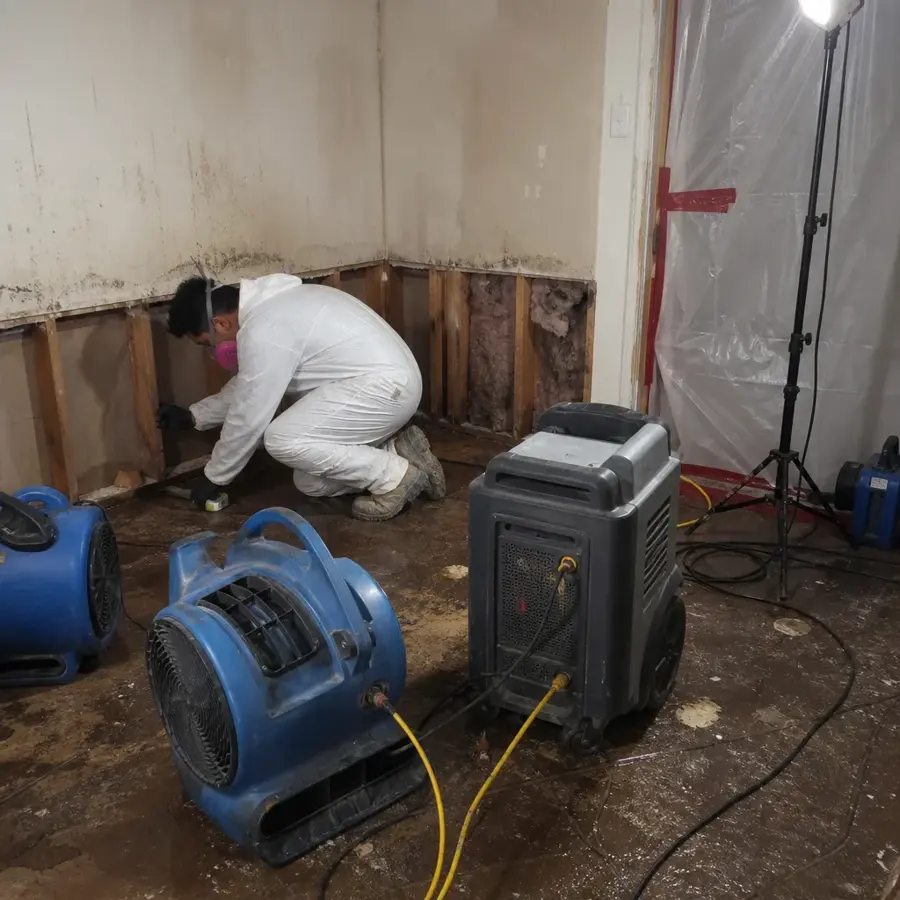
How the dry-out is held to a standard
Moisture mapping
Wet materials are mapped before any equipment goes down.
Extraction
Truck-mounted extraction removes standing water first.
Drying
Air movers and LGR dehumidifiers are sized to each room.
Verification
Readings are logged daily until the drying goal is met.
- IICRC S500 drying standard
- Category 1, 2 and 3 protocols
- Class 1 through 4 equipment sizing
- EPA-registered antimicrobial
Water damage in Mission Viejo?
The restoration team runs 24/7 dispatch across Mission Viejo, Lake Mission Viejo and the Saddleback Valley.